Veneers: Materials, Veneers vs Crowns & What They Cost
 Written by Michael Seutin,
founder — former nurse, researching dental pricing abroad.
Written by Michael Seutin,
founder — former nurse, researching dental pricing abroad.
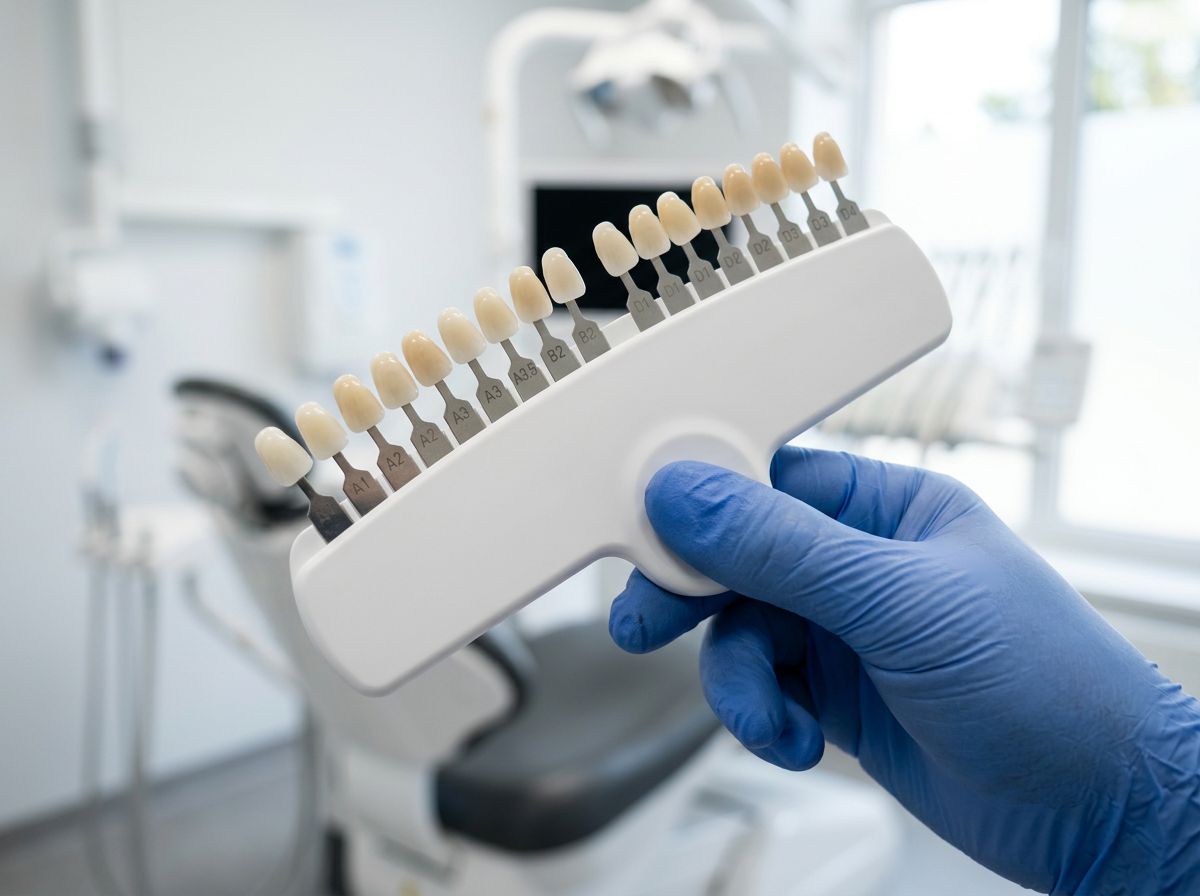
A veneer is a thin shell bonded to the front of a tooth to fix its color, shape or small gaps — a cosmetic layer, not a structural repair. Two things decide both the price and how much healthy tooth you keep: the material (composite, porcelain/E-max or zirconia) and whether what's quoted is actually a veneer at all — many cut-price "veneer" packages are full crowns. Per tooth, expect $1,000–$2,500 in the US. In the UK the NHS does not fund a cosmetic veneer at any price, and for Turkey we publish each clinic's own figure rather than an average.
Get free quotes from vetted clinics
Tell us roughly what you need — we pass it to vetted clinics and you compare offers. Free, no obligation.
what a veneer is — and what it isn't
A true veneer covers only the front face of the tooth and needs minimal preparation — a light shaving of enamel, sometimes none. A crown wraps the whole tooth and requires grinding most of it away, permanently. Both have legitimate uses; the problem is the label: budget full-set packages routinely sell crowns as "veneers". The fix is contractual — veneer or crown, named per tooth, in the written plan. Our guide on how "turkey teeth" go wrong covers exactly this failure.
who veneers are for — and when to say no
Veneers suit healthy teeth with cosmetic problems: staining that whitening can't fix, chips, small gaps, minor misalignment. They are not for teeth that need structural help (that's a crown, honestly labeled) and they're risky for heavy grinders without a night guard. The loudest red flag in dental tourism: a plan to put 16–20 "veneers" on teeth that never had a complaint. In a BBC investigation, over half of 120 Turkish clinics recommended crowning 20+ healthy teeth from photos alone — every UK dentist consulted said those teeth needed nothing.
composite vs porcelain vs zirconia
Material is most of the per-tooth price — and the durability you're buying.
| material | best for | typical lifespan | cost |
|---|---|---|---|
| Composite | single-visit fixes, small budgets, reversible-ish | ~5–7 years; stains, repairable chairside | cheapest per tooth |
| Porcelain / E-max | the natural look — translucency closest to enamel | 10+ years documented in clinical studies | the standard veneer price |
| Zirconia | strength; full-arch cosmetic cases | 10+ years; hardest wearing | cheapest per tooth in Turkey — and usually listed as a crown |
what it costs by country
Published 2026 ranges, sourced below. A quote depends on brand, materials and your case.
in our directory now: Mexico — 25 verified clinics from $350 · Turkey — 6 verified clinics from $255
verified clinics for this procedure
Lowest published price first. Every listing is checked against the clinic's own sources — what verified means.
SOTA Dental Cancún
verifiedCancún, Mexico
$1,399 per implant, complete
SOTA Dental Los Algodones
verifiedLos Algodones, Mexico
$1,399 per implant, complete
SOTA Dental Tijuana
verifiedTijuana, Mexico
$1,399 per implant, complete
Algodones Dental Center
verifiedLos Algodones, Mexico
$1,500 per implant, complete
Dental Solutions Tijuana
verifiedTijuana, Mexico
$1,545 per implant, complete
Cancun Dental Design
verifiedCancún, Mexico
$1,600 per implant, complete
related
- Turkey teeth gone wrong — the crowns-sold-as-veneers failure, and how to avoid it
- Veneers cost in Turkey — sourced per-tooth and full-set ranges
common questions
What's the difference between veneers and crowns?
A veneer covers the front face of the tooth after minimal enamel removal; a crown replaces the whole outer tooth after most of it is ground away. A crown is right for a damaged tooth — the problem is crowns sold as "veneers" on healthy teeth, which trades healthy enamel for a lifetime replacement cycle.
How long do veneers last?
Composite runs about 5–7 years and can be repaired in the chair. Porcelain/E-max is documented past 10 years in clinical studies with high survival rates; zirconia wears at least as long. Grinding without a night guard shortens all of them.
Do veneers ruin your teeth?
Properly done, a veneer removes a thin layer of enamel — a small, permanent change that commits you to maintaining the veneer. What ruins teeth is full crowning marketed as veneers: once a healthy tooth is cut down for a crown, there's no way back.
How many veneers do people actually get?
Commonly 8–10 — the teeth visible when you smile — with whitening to match the rest. Full sets of 16–20 exist for genuine full-mouth cosmetic cases, but as a default recommendation from photos alone it's a sales pattern, not a treatment plan.
sources
- Evaluation of E-max porcelain veneer failures — retrospective clinical study (PMC)
- British Dental Association — dental tourism: patients need to know the risks (survey)
- Maltepe Dental Clinic — Turkey veneers price guide 2026
- Real Dental Costs — US veneer averages
Educational overview, not medical advice — treatment decisions need an examination. Ranges are published figures for comparison, not quotes.